Home to Harlem: Celebrating Black Bibliography at the Schomburg Center
Location: Schomburg Center for Research in Black Culture - New York Public Library, 515 Malcolm X Blvd, New York, NY 10037
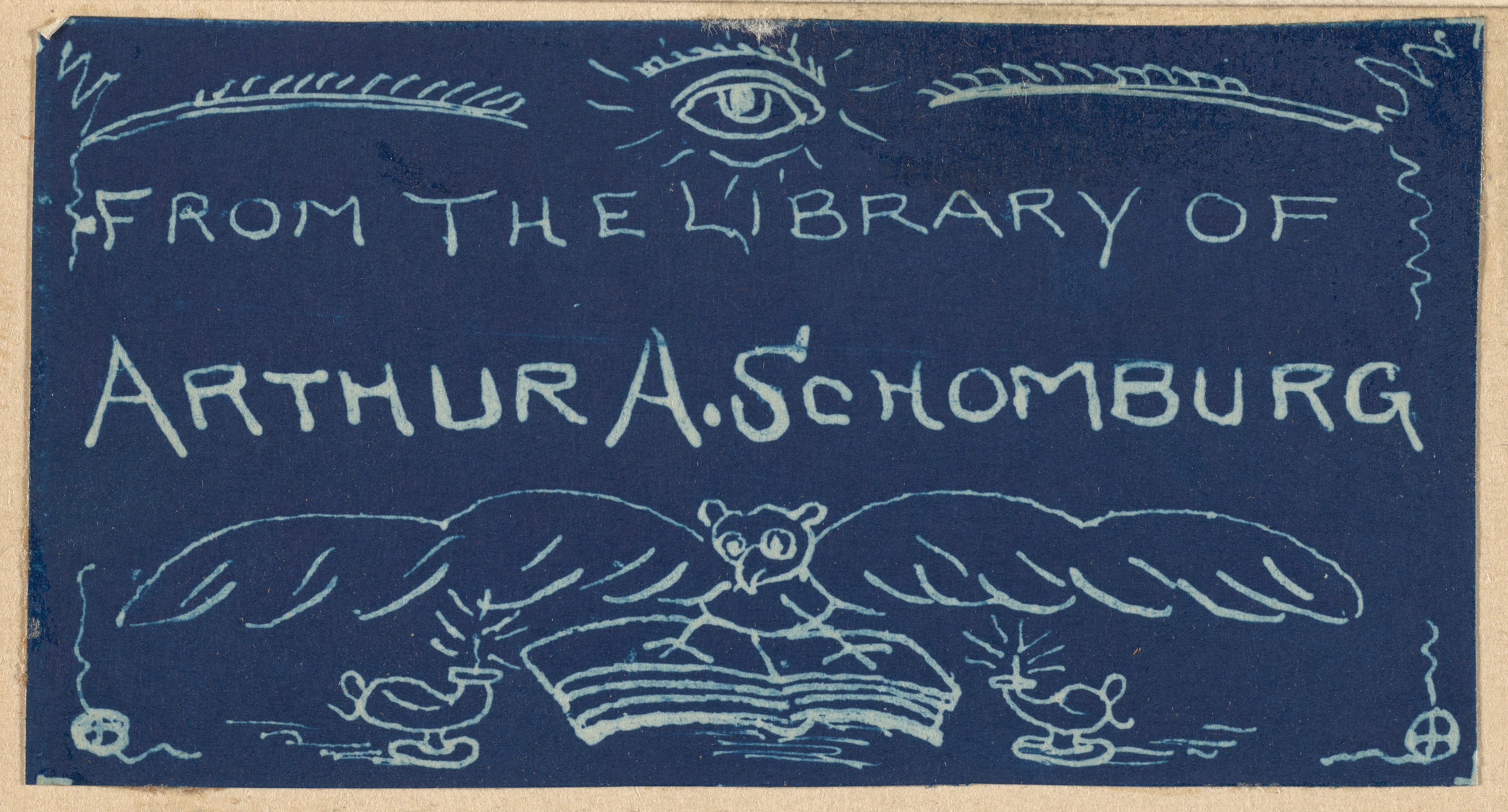
Personal book plate or Arturo “Arthur” Schomburg featuring the Eye of Providence image used by freemasons, as well as an owl with outstretched wings perched atop an open book, flanked by two lamps–all symbols of knowledge and wisdom. Manuscripts, Archives, and Rare Books Division, Schomburg Center for Research in Black Culture, New York Public Library.
About the Event ↑
This half-day symposium celebrates the culmination of the Home to Harlem project, a multiyear effort by scholars, archivists, and librarians to identify and enhance access to the original collections of the Schomburg Center for Research in Black Culture. Through a decade of meticulous provenance research, the Home to Harlem team reconstructed a nearly complete inventory of the personal library of Arturo Schomburg, whose collection of books, manuscripts, and art turned the 135th Street branch of the New York Public Library into a global destination for the study of the African diaspora. To mark the centennial of the 1926 acquisition of Schomburg’s library, Barrye Brown, Laura E. Helton, and Vanessa K. Valdés co-edited Black Studies on 135th Street: The Founding and Future of the Schomburg Collection, published this year by Yale University Press. The publication features a descriptive bibliography with 3,270 entries and includes information on association and presentation copies that tell the story of Schomburg as a bibliophile and collector.
As part of the Schomburg Center’s centennial celebration, this half-day symposium, “Home to Harlem: Celebrating Black Bibliography at the Schomburg Center,” will reflect on the history and future of Black bibliography. Through panel discussions, an open house, and an exhibition tour, this event will provide a behind-the-scenes look at how the Home to Harlem team used material evidence—bookplates, accession numbers, inscriptions, library stamps, card catalogs, and archival documents—to identify items in Arturo Schomburg’s collection. We will also demonstrate ways that researchers can use both the printed bibliography and more than 3,000 enhanced catalog records to explore new topics in global book history and Black intellectual history. And finally, we will reflect together on the field of Black bibliography and why it matters today. This event coincides with the current centennial exhibition, “To Uncover and Reveal to the World: Arturo Schomburg’s Library,” which features over one hundred books, manuscripts, and prints that were part of the Schomburg Center’s foundational holdings.